How to Send Money from Ghana to Nigeria in 2026
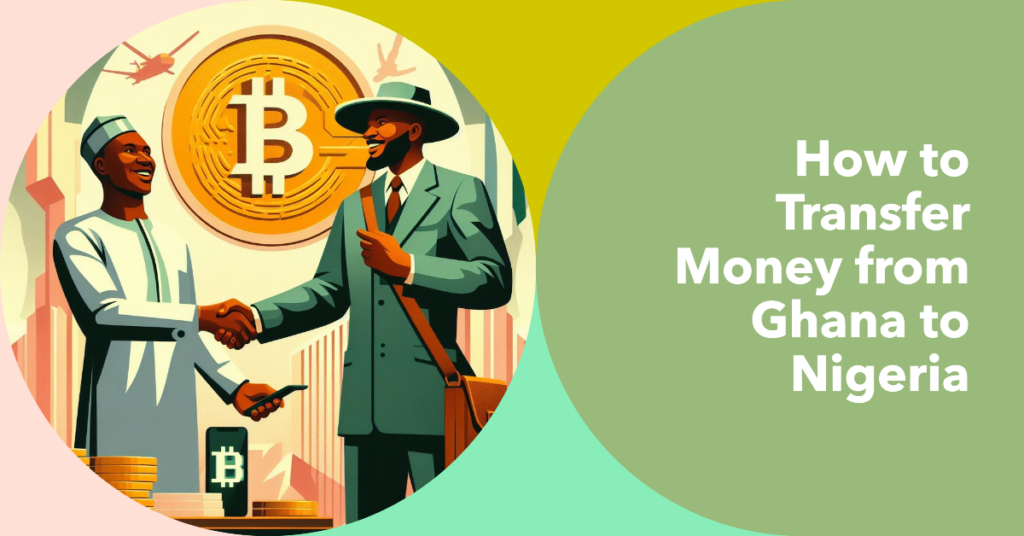
Sending money from Ghana to Nigeria is one of the most expensive remittance corridors in the world. The World Bank measures it at 13.29% of the amount sent, and 6.20 percentage points of that sits in the exchange rate rather than in any fee you can see. This guide compares every working route in 2026, with real GHS to NGN rates, provider fees, settlement times and limits. It also settles the two questions that generate most of the confusion on this corridor: whether you can send using OPay, and whether MTN Mobile Money can cross into Nigeria. If you send money between the two countries regularly, or you are comparing money transfer services for a one-off transfer, the numbers below are what you are actually paying.
The Short Answer: What a Ghana-to-Nigeria Transfer Costs in 2026
The World Bank’s Remittance Prices Worldwide database measures the Ghana to Nigeria corridor at a total average cost of 13.29% of the amount sent, based on data collected in August 2025. On the Bank’s USD 200 benchmark that is about USD 26.58.
The number worth sitting with is what sits inside it. Of that 13.29%, an exchange-rate margin of 6.20 percentage points is baked into the rate the provider gives you. Close to half the cost of sending money on this corridor never appears as a fee. It appears as a worse exchange rate than the one you see on a currency converter.
That single fact explains why comparing advertised fees on this corridor tells you almost nothing. Two providers can both say “low fee” or “no fee” and deliver very different naira amounts, because the money is being taken in the rate, not the fee. The only number that matters is what your recipient actually receives.
Practically, on a GHS 5,000 transfer, that means roughly GHS 200 to GHS 665 disappearing somewhere in the transaction, depending on which route you use. The cheapest way to send money to Nigeria is not a fixed answer: it changes with the amount, the speed you need, and how your recipient wants to be paid.
Our Ghana to Nigeria transfer page sets out the current route, supported payment methods and limits.
Ghana to Nigeria Is a Remittance Corridor, Not Just a Transfer
It helps to name what this is. A remittance is money a migrant worker sends home to family. Globally, remittances are one of the largest sources of external finance for developing countries, and they are unusually resilient: they kept flowing through the 2008 financial crisis and through the COVID-19 pandemic, when foreign direct investment and official aid both fell.
Africa received an estimated USD 124 billion in remittance inflows in 2025, according to World Bank figures, which is roughly twice the continent’s overseas development assistance. In Sub-Saharan Africa, remittances are worth about 3.3% of GDP on average, and 18 of Africa’s 54 countries depend on them for at least 4% of GDP. Around 75% of the money goes to food, housing, education and health rather than saving or investment.
The intra-African half that most guides ignore
Almost every remittance guide is written about diaspora corridors: the UK to Nigeria, the US to Ghana, Canada to Kenya. But roughly USD 19.4 billion a year moves between African countries, according to World Bank estimates, and that intra-African flow behaves differently from money sent from Europe or North America.
Three differences matter for Ghana to Nigeria specifically:
- It is more expensive than sending from outside the continent. Intra-African corridors average around 11%, against a global average near 6%. Sending from London to Lagos is usually cheaper than sending from Accra to Lagos. This is counter-intuitive and it is one of the clearest findings in the World Bank’s corridor data.
- Both ends sit inside a free-movement zone. Ghana and Nigeria are both ECOWAS members, and the ECOWAS Protocol on Free Movement of Persons allows citizens to live and work in each other’s territory without a visa. That is why the corridor exists at all: a large population of Ghanaians works in Nigeria and Nigerians in Ghana, and both send money home routinely.
- Banks dominate it, and banks are the most expensive channel. On thin corridors there are fewer competing providers, and where banks are the only option, the World Bank finds costs are highest. That is the situation on this corridor today.
This is the context behind every fee table below. Ghana to Nigeria is not an expensive corridor because providers are unusually greedy. It is expensive because there is no deep direct market between the cedi and the naira, so value has historically had to travel through a third currency. If you want the mechanism in more depth, our explainer on how blockchain remittances work covers how stablecoin rails fit into this picture, and the ultimate guide to sending money to Nigeria covers the receiving side in full.
GHS to NGN: The Rate, and Why This Corridor Is So Expensive
In the first days of October 2026, the mid-market rate sat at roughly ₦113 per Ghanaian cedi, drifting between about ₦112.5 and ₦114.6 across the first nine days of the month. Over the previous 30 days the rate ranged from ₦113.22 to ₦118.39. Treat any figure here as a reference point and check a live converter before you send. Our cryptocurrency converter shows live rates if you want to compare against what a provider is offering you.
Why the cedi and the naira never traded directly
There is no liquid GHS/NGN market in the way there is a liquid GBP/NGN or USD/NGN market. To move value from Accra to Lagos, funds historically took a detour: cedis to dollars, dollars across, dollars to naira. Each hop has a spread, and each hop has a correspondent bank taking a fee.
This is also why the hidden margin is so large. A provider quoting you a cedi-to-naira rate is not quoting a market rate, because there is no market rate. It is quoting a rate it has constructed, usually by pricing through the dollar. The margin between the rate it offers and the rate it obtained is where the 6.20 percentage points live.
PAPSS, the Pan-African Payment and Settlement System run by Afreximbank and the African Union, was designed to end that detour. It settles in local currencies, so a Ghanaian bank debits cedis and a Nigerian bank credits naira without a dollar ever entering the transaction, with settlement completing in under 120 seconds. The catch is that it is a bank-to-bank rail, not a consumer product: you initiate it through your own bank, and each bank sets its own tariff, so no single published fee exists for the corridor. Individual senders are generally limited to about USD 2,000 equivalent per month without supporting documentation, and the Nigeria to Ghana direction carries a per-transaction cap of roughly GHS 10,000 with proof of funds required above routine amounts. If you want the underlying economics of cross-border settlement, our guide to international transfer fees breaks down where each charge originates.
Where This Corridor Sits in Global Cross-Border Transfers
Ghana to Nigeria is unusual, but it is not unique. It is one instance of a pattern that shows up wherever two neighbouring countries trade heavily in people but not in currency.
Cross-border money transfers run on four basic rails, and every route on this corridor uses one of them:
- Correspondent banking. The traditional SWIFT model. Slow, expensive, and reliant on a chain of intermediary banks each taking a cut. It remains the default for anything large or unusual.
- Money transfer operators and remittance apps. Sendwave, LemFi, Wise, Remitly and others aggregate volume and route through their own liquidity. Fast and cheap on high-volume diaspora corridors, thinner and more expensive where volume is low.
- Regional settlement systems. PAPSS is the African example, and it exists precisely because correspondent banking was failing intra-African payments. Other regions have equivalents.
- Stablecoin rails. USDT and similar dollar-pegged tokens move value across borders in minutes without a correspondent bank, then convert to local currency peer to peer. This is the newest rail and the one this guide covers in detail.
The reason these rails matter is that most people comparing options compare brands rather than rails. Choosing between two remittance apps is a choice within rail two. Choosing between an app and a USDT route is a choice between rails two and four, and that decision moves the cost far more than any brand comparison will.
If you are transferring between other countries, the same framework applies, and our international money transfer and global money transfer hubs cover the corridor-agnostic version. For comparison, the UK to Nigeria corridor runs on far deeper liquidity than this one, and the Kenya to Nigeria corridor has its own distinct cost structure.
Can You Send Money from Ghana to Nigeria Using OPay?
No, and the reason is not a restriction. It is that OPay does not operate in Ghana.
OPay is a Nigeria-headquartered wallet, with operations in Nigeria, Egypt and Pakistan. Its accounts are naira-denominated and tied to Nigerian KYC. There is no OPay Ghana app to send from, and OPay cards cannot be used in Ghana, because they are issued in naira on the Verve network for local use.
This matters because “how to send money from Ghana to Nigeria using OPay” is one of the most common phrasings of this search, and most of what ranks for it answers a question that does not exist. Here is the accurate version:
- OPay is a receiving endpoint, not a sending app. A sender in Ghana cannot initiate a transfer from OPay. A recipient in Nigeria absolutely can receive into an OPay wallet.
- The sending side has to be something else. That is a bank participating in PAPSS, a licensed remittance app, or a peer-to-peer route.
- What actually reaches an OPay wallet is a payout instruction. Sendwave and LemFi both pay out to Nigerian OPay and PalmPay wallets directly, using the recipient’s Nigerian phone number as the wallet identifier. Other providers pay into a Nigerian bank account, and the recipient moves the money into OPay themselves.
So if your recipient wants the money in OPay, the correct question is not “how do I send from OPay” but “which provider can pay out to OPay.” The answer is a remittance app that lists OPay as a payout channel, or a P2P route where the Nigerian buyer transfers naira to the wallet directly. Our guide to receiving money from abroad in Nigeria covers the receiving side, including how to open and use a PalmPay account in Nigeria if your recipient is setting one up.
Can You Send Money from Ghana to Nigeria with MTN Mobile Money?
This one has a clear official answer, and it is widely misreported.
The Bank of Ghana has confirmed that MobileMoney Limited, the operator of MTN MoMo, is not licensed or authorised to conduct cross-border transactions to Nigeria. The central bank issued that clarification on 20 March 2025 after media reports claimed a licence had been granted, and it has restated the position since.
What is real is a sandbox pilot. The Bank of Ghana approved BrijX, a business-to-business currency swap platform built by Brij Fintech Ghana, a licensed payment service provider. BrijX allows direct cedi-to-naira swaps without a forex transaction or funds physically crossing a border, and it integrates with banks, mobile money providers and licensed PSPs. Live testing began in February 2025 with selected MTN MoMo customers, under transaction limits, a capped participant count and full AML/KYC controls. The Bank of Ghana will assess the results before deciding on any broader policy.
The practical takeaway: treat any guide telling you to dial a USSD code and send MoMo straight to Nigeria with caution. Consumer MoMo-to-MoMo between the two countries is not an authorised product today. What does work is using MoMo as the funding leg, with a licensed provider handling the cross-border part. Several remittance apps accept MTN MoMo as the payment method on the Ghana side and settle into a Nigerian bank account or wallet.
Mobile money is the dominant way Ghanaians hold and move money domestically, so this matters more than it would elsewhere. CoinCola lists MTN Mobile Money among the payment methods available in its Ghana market, where it is used to buy and sell crypto rather than as a direct cross-border rail. If you want that route in detail, our guide to buying Bitcoin in Ghana with MTN Mobile Money walks through it step by step, and our crypto to mobile money in Ghana page covers the cash-out direction.
Ghana to Nigeria Transfer Methods Compared
Five routes are genuinely available in 2026. The table compares them on the same GHS 5,000 transfer.
| Feature | Bank transfer via PAPSS | Remittance app | Branch transfer service | SWIFT wire | CoinCola USDT bridge |
|---|---|---|---|---|---|
| How it routes | Direct cedi-to-naira settlement, no USD leg | Provider converts through its own liquidity | Provider network, branch initiated | Via USD, through correspondent banks | Cedis to USDT, USDT to naira, two peer trades |
| Fee structure | Set by your bank, no single published tariff | Usually no visible send fee; the cost sits inside the GHS/NGN rate | GTMT free to GTBank accounts; AccessAfrica USD 5 flat plus 1% | GHS 40 to 150 plus correspondent fees | No platform fee on accepted offers; two P2P spreads apply |
| Typical speed | Under 120 seconds | Minutes | Instant to same day | 1 to 3 business days | 10 to 30 minutes |
| Limits | About USD 2,000 equivalent per month for individuals without documentation; roughly GHS 10,000 per transaction on this route | Set by the provider | GTMT up to USD 10,000 per transfer | Set by your sending bank | Depends on live peer liquidity, not a fixed cap |
| Access | Requires a participating bank on both sides | App, funded by MoMo, card or bank | Branch visit required | Branch | App or web, 24 hours a day |
| Recipient receives | Naira in a Nigerian bank account | Naira in a bank account or wallet such as OPay | Naira in a participating bank | Naira in a Nigerian bank account | Naira in a Nigerian bank account or wallet, paid directly by the buyer |
The World Bank’s provider-level data for this corridor shows how tight and how expensive the formal end is. On the USD 200 benchmark, EcoBank Rapid Transfer measured at about 12.82%, UBA Africash at about 13.74%, and UBA’s own service at about 13.87%. All of them are banks, and all of them price above the corridor average because their rates are constructed rather than traded.
Because so much of the cost is in the rate, the comparison on fees alone is misleading. At 13.29% on GHS 5,000, about GHS 665 leaves the transaction before your recipient sees anything. Comparing the exchange rate to Nigeria across providers tells you more than comparing their fee tables, and reading a standard how to send money walkthrough helps you spot which charge is which.
For the current CoinCola rates and the payment methods supported on this corridor, see our Ghana to Nigeria transfer page.
How to Send Money from Ghana to Nigeria Using USDT: 3 Steps
This is the route we operate, so read it knowing that. It uses a stablecoin as the bridge between cedis and naira. It takes about 15 minutes the first time and less once your account is set up.
Step 1: Buy USDT with Cedis
Create a CoinCola account and buy USDT in the Ghana market, funded by the payment methods listed there, including MTN Mobile Money. USDT is pegged to the US dollar, so its value does not swing while you complete the second leg. Taking an offer that is already posted costs no platform fee. You can browse live offers on the buy Tether with Ghanaian Cedi page, and the CoinCola Ghana market page lists the supported local payment methods. If you already hold Bitcoin and would rather convert it, converting Bitcoin to cedis in Ghana is the same first step in a different asset.
Step 2: Sell USDT for Naira
Move to the Nigerian market and sell that USDT to a verified Nigerian buyer offering the best rate. Because you are choosing between competing buyers rather than accepting one corporate rate, you can see the rate before you commit, which is precisely the margin that banks keep hidden. Live offers are on the sell Tether for Nigerian Naira page, and the CoinCola Nigeria market page covers local payment methods and limits. If you would rather sell into a naira balance and withdraw from there, selling USDT directly for naira is the equivalent route.
Step 3: Receive Naira in a Nigerian Account
The buyer transfers naira directly to your recipient’s Nigerian bank account or wallet. Once your recipient confirms the money has landed, you release the USDT from escrow. Nothing moves until both sides confirm.
Two things are worth stating plainly rather than glossing over. First, this route involves two peer-to-peer trades, so two spreads apply, not zero cost. The advantage over a bank is that the second leg prices at the naira market rate rather than a constructed corporate rate, and that no correspondent bank is taking a cut in the middle. Second, the GHS market is thinner than the NGN market, and this is measurable rather than a hunch. On 15 October 2026 the Ghana market carried 8 live offers to buy USDT with cedis, against 44 on the Nigerian side. Fewer competing offers means a wider spread: cedi-side quotes that day ranged from 12.45 to 20.50 GHS per USDT, so where you land inside that range moves your cost far more than any fee on a pricing page. Check both legs before you start, not after.
If your transfer has already been initiated somewhere else and is stuck, our guide to why international money transfers get delayed covers the seven most common causes.
What CoinCola Charges for a Ghana-to-Nigeria Transfer
CoinCola charges no platform fee when you take an offer someone else has already posted, which is the route described above and the one most senders use. The platform does not take a percentage of your transfer on top of the rate. To be precise about what that does and does not cover:
- It covers CoinCola’s commission on the P2P buy leg. There is no platform cut added to your transfer.
- It applies to accepting an existing offer, not to posting your own. If you post an offer instead, CoinCola charges a trading fee on the completed amount: 0.70% on a fiat offer and 4.00% on a gift card offer. Those two rates are not interchangeable, and the published fee schedule lists them as separate lines.
- It does not make the transfer free in every respect. Your funding method may carry its own cost, set by your bank or mobile money provider rather than by CoinCola.
- It does not remove the peer-to-peer spread on either leg. You are trading against other users, and the rate you are offered reflects that market at that moment.
- Exchange rates move daily. The rate is set by the counterparty you choose, so it varies with liquidity and market conditions when you trade.
That is a more honest framing than “free transfers”, and it is the same standard you should apply to every provider on this corridor. Any service quoting you a single confident rate on a cedi-to-naira transfer without showing you where it came from is showing you the 6.20% margin without labelling it.
Check the live rate on the Ghana to Nigeria transfer page before you send, and check the published fee schedule for anything outside P2P trading, such as deposits and withdrawals. If you are comparing against named competitors, we have direct breakdowns of the Wise alternative and Remitly alternative routes for this market.
How Long Does a Ghana to Nigeria Transfer Take?
| Route | Typical settlement time |
|---|---|
| Bank transfer via PAPSS | Under 120 seconds |
| Remittance app | Minutes |
| Branch transfer service (GTMT, AccessAfrica) | Instant to same day |
| SWIFT wire | 1 to 3 business days |
| CoinCola P2P (USDT bridge) | 10 to 30 minutes |
Speed is where this corridor has genuinely improved. A PAPSS transfer settles in under two minutes and runs during banking hours. The CoinCola route settles in 10 to 30 minutes and runs 24 hours a day, seven days a week, including weekends and public holidays, which matters if you are sending on a Friday evening when a bank transfer would sit until Monday.
The variable in any peer-to-peer route is the counterparty, not the platform. You are waiting for a buyer to send naira and confirm, and during low-liquidity periods that can take longer than the typical window.
Is Sending Money from Ghana to Nigeria Safe?
The honest answer is that safety depends far more on the channel than on the technology. A licensed bank rail and a peer-to-peer trade are both safe when used correctly, and both have failure modes when they are not.
On the bank rail, your protection is prudential regulation. PAPSS participants are licensed banks on both sides, supervised by the Bank of Ghana and the Central Bank of Nigeria respectively.
On a peer-to-peer route, your protection is escrow. CoinCola locks the USDT until both parties confirm the trade, so a buyer cannot take your USDT without paying, and you cannot take their naira without releasing. This removes the most common failure mode, which is one side simply not honouring the deal. Three precautions apply regardless of platform:
- Trade only with counterparties who have a completed trade history on the platform.
- Keep the transaction inside escrow. Anyone asking you to settle off-platform, by direct wallet transfer or over a messaging app, is removing your only protection.
- Confirm the naira has actually landed in your recipient’s account before releasing escrow, rather than taking the buyer’s word for it.
Nigeria is one of the world’s largest crypto markets by grassroots adoption, and Chainalysis’s Global Crypto Adoption Index has consistently ranked it in the global top tier. That adoption is not speculative: it is driven substantially by exactly this use case, moving value across borders where formal channels are slow or expensive. Ghana’s market is smaller but follows the same pattern, and you can see how Ghanaians sell Bitcoin on CoinCola in practice, or how P2P naira trading works from the Nigerian side. The same cross-border pressure that makes this corridor expensive also explains why P2P liquidity exists on it at all.
Other Ways to Send Money from Ghana to Nigeria
Crypto P2P is not the only option, and for some senders it is not the right one. Here is an honest comparison of the alternatives.
PAPSS bank transfer. The most significant improvement on this corridor in years, and for many senders now the best default. It settles in local currency, in seconds, between licensed banks. Its weakness is that it is a bank rail: bank hours, bank tariffs, documentation thresholds, and a per-transaction cap that will not suit everyone.
Licensed remittance apps. Sendwave, LemFi, Eversend, Ace and Wise all operate this corridor legitimately, with apps funded by MTN MoMo, card or bank, and payout into Nigerian bank accounts and wallets including OPay and PalmPay. Many advertise no send fee, which means the cost is in the rate. If you want the ranked version, our best money transfer app to Nigeria and best way to send money to Nigeria pages compare them on total delivered value rather than headline fee.
Branch transfer services. GTMT moves money free into GTBank accounts in Nigeria, instantly, up to USD 10,000 per transfer. AccessAfrica charges USD 5 flat plus 1%, with the recipient paying nothing. Africash via UBA is instant with no receiving limit. All three require a branch visit, which is the trade-off.
SWIFT wire. Works, is slow, and is the most expensive option once correspondent bank fees are counted. Its advantage is familiarity and the fact that the money moves between regulated institutions end to end.
Informal channels. Handing cash to a friend, a trader or an unlicensed agent is common across West Africa and is the riskiest option available. There is no escrow, no recourse and no record. We do not recommend it.
For the broader menu, including the difference between app-based and branch-based services, see our money transfer apps and money transfer services hubs.
Frequently Asked Questions (FAQs)
The World Bank measured the Ghana to Nigeria corridor at a total average cost of 13.29% of the amount sent in its Q3 2025 survey, which is roughly GHS 665 on GHS 5,000. That total includes an exchange-rate margin of 6.20 percentage points, which is money taken in the rate rather than in a visible fee. Bank providers on the corridor price slightly higher than the average, and P2P routes price differently again.
The mid-market rate was around ₦113 per cedi in early October 2026, ranging between roughly ₦112.5 and ₦114.6 across the first nine days of the month. The rate moves daily, so check a live converter before sending. On this corridor the rate a provider offers you is what matters, not the mid-market figure, because the gap between them is where most of the cost sits.
No. OPay does not operate in Ghana. It is a naira-denominated wallet for Nigeria, Egypt and Pakistan, and its cards cannot be used in Ghana. OPay works as a receiving endpoint: a licensed remittance app such as Sendwave or LemFi can pay out into a Nigerian OPay wallet, but you cannot send from OPay Ghana because there is no OPay Ghana.
Not directly. The Bank of Ghana confirmed in March 2025 that MobileMoney Limited is not licensed for cross-border transactions to Nigeria. The only approved cross-border mechanism is the BrijX business-to-business sandbox pilot run by Brij Fintech Ghana. What does work is using MTN MoMo to fund a licensed remittance app or a P2P platform, with the provider handling the cross-border leg.
Because liquidity runs the opposite way to intuition. Corridors from high-income countries carry enormous volume, so providers compete and margins compress. Intra-African corridors average around 11% against a global average near 6%, because there is no deep direct market between most African currency pairs. A UK sender benefits from a liquid GBP/NGN market. A Ghanaian sender does not have an equivalent GHS/NGN market to price against.
Historically no, which is why the corridor was expensive: transfers were priced through the US dollar and the sender paid two spreads. PAPSS now settles directly in cedis and naira between participating banks, removing the dollar leg. It is live on the Ghana to Nigeria corridor, but bank availability, tariffs and caps vary, so not every sender has access to it.
A PAPSS bank transfer settles in under 120 seconds. Licensed remittance apps take minutes. A SWIFT wire takes 1 to 3 business days. A CoinCola P2P trade completes in 10 to 30 minutes and runs 24 hours a day, including weekends and public holidays.
Yes. On the CoinCola route, the Nigerian buyer transfers naira directly into your recipient’s bank account or wallet. Your recipient never needs a crypto wallet or an exchange account. The crypto part of the transaction stays on your side of the transfer.
Any Nigerian bank account can receive it, along with major wallets including OPay and PalmPay. Some providers pay out only to bank accounts and others pay out to wallets directly, so confirm your provider supports your recipient’s endpoint before you send.
On a P2P route, the USDT stays locked in escrow until both parties confirm. If the buyer does not pay, you do not release the USDT, and the trade does not complete. Escrow is what separates a P2P transfer from simply sending crypto to a wallet and hoping.
The Bottom Line
Sending money from Ghana to Nigeria has historically been one of the most expensive transfers in the world, because there was no direct cedi-to-naira market and every transfer paid two currency spreads plus correspondent bank fees. The World Bank’s corridor data puts a number on it: 13.29% on average, with 6.20 percentage points of that hidden inside the exchange rate rather than disclosed as a fee.
Two things have changed that in 2026. PAPSS now settles the corridor in local currencies in under two minutes between licensed banks, and stablecoin P2P offers a second route that prices the naira leg at the market rate rather than a constructed corporate rate.
Neither is free, and it is worth being precise about why. PAPSS removes the dollar leg but leaves you with bank tariffs and documentation thresholds. A P2P route removes the correspondent bank and the platform fee, but you pay two peer-to-peer spreads instead, and the cedi side of that market is thinner than the naira side. On GHS 5,000, the corridor’s average cost of 13.29% amounts to about GHS 665. That is the number to beat, and the only meaningful way to beat it is to compare what your recipient actually receives rather than what each provider advertises as its fee.
Whichever route you choose, check the live rate before you send. On this corridor a two-point difference in the rate is worth more than any fee you will see on a pricing page.
Ready to compare rates? See the current Ghana to Nigeria route on CoinCola or browse live USDT offers in the Ghana market.
This is not financial advice. Always DYOR (Do Your Own Research).