Why Is My International Money Transfer Delayed? 7 Common Reasons and Faster Alternatives
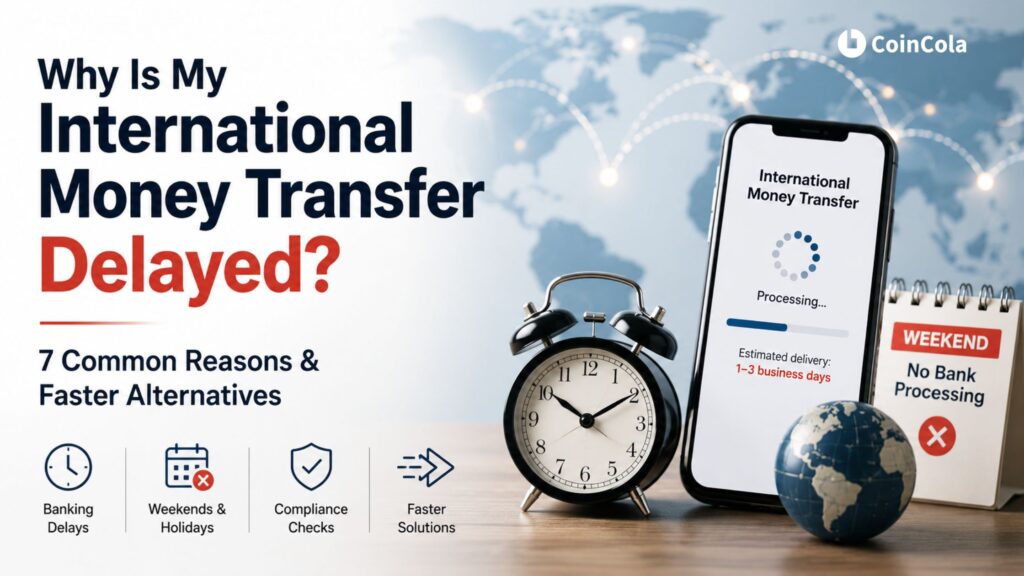
You’ve sent the money. The payment has been deducted from your account. But hours—or even days—later, your recipient is still waiting.
If you’ve ever wondered, “Why is my international money transfer delayed?”, you’re not alone. Before looking at the reasons behind transfer delays, it’s helpful to understand how an international money transfer works from initiation to settlement. Once you know how funds move across borders, it’s easier to identify where delays can occur.
While many international transfers are completed smoothly, delays can happen for several reasons. Some are caused by banking schedules, while others are related to compliance checks or payment processing.
In this guide, we’ll explain the most common causes of delayed international money transfers, what you can do about them, and why some modern payment methods can significantly reduce waiting times.
How Long Should an International Money Transfer Take?
The answer depends on how you’re sending the money.
Typical processing times include:
| Transfer Method | Typical Delivery Time |
|---|---|
| Domestic bank transfer | Minutes to one business day |
| International bank transfer (SWIFT) | 1–5 business days |
| Online money transfer service | Minutes to 2 business days |
| Blockchain-based transfer | Usually completed after network confirmations |
| Crypto P2P settlement | Often completed much faster than traditional banking routes, depending on blockchain confirmations and the responsiveness of both trading parties |
If your transfer is taking longer than expected, one of the following reasons may be responsible.
1. Your Transfer Was Sent Outside Banking Hours
One of the most common reasons for delays has nothing to do with technology—it has to do with bank operating hours.
Although you can submit an international transfer online at any time, many banks still process payments according to business hours and cut-off times.
For example:
- A transfer submitted late on Friday may not begin processing until Monday.
- Public holidays in either the sending or receiving country can add another day or more.
- Some intermediary banks also follow their own operating schedules.
As a result, money can remain in a “processing” status even though you’ve already completed the payment.
2. International Bank Transfers Depend on Multiple Financial Institutions
Many international transfers travel through several financial institutions before reaching the recipient.
Depending on the countries and currencies involved, a transfer may pass through:
- The sending bank
- Correspondent (intermediary) banks
- The receiving bank
Each institution performs its own processing and verification steps, which can increase the overall transfer time.
Even if the payment instruction has been sent successfully, the funds may still be moving through the settlement process.
3. Compliance and Security Reviews
Financial institutions are required to comply with Anti-Money Laundering (AML) and Know Your Customer (KYC) regulations.
Additional reviews are more likely if:
- You’re sending a large amount.
- This is your first transfer.
- The destination is considered higher risk.
- Required information is incomplete.
These checks help prevent fraud and financial crime, but they can also delay payment processing.
4. Weekends and Public Holidays Slow Down Traditional Transfers
This is one of the biggest frustrations for people sending money abroad.
Imagine you initiate a transfer on Saturday afternoon.
While your online banking app accepts the transaction immediately, some parts of the traditional banking process may not continue until the next business day.
For urgent situations—such as supporting family overseas, paying tuition fees, or making emergency payments—even a one- or two-day delay can be significant.
5. Incorrect Recipient Information
Simple mistakes can also delay an international transfer.
Examples include:
- Incorrect account number
- Wrong beneficiary name
- Invalid SWIFT/BIC code
- Incorrect bank details
Before confirming any transfer, double-check every piece of recipient information carefully.
Correcting an error after submission can take considerably longer than preventing one in the first place.
6. The Receiving Bank May Need Additional Processing
Even after the payment reaches the destination country, the receiving bank may require additional time before crediting the funds.
This may happen because of:
- Internal verification procedures
- Batch processing schedules
- Regulatory reviews
- Local banking system requirements
In other words, “money sent” doesn’t always mean “money received.”
7. Currency Conversion Can Add Extra Time
When the sender and recipient use different currencies, an additional conversion step may be involved.
Depending on the provider, this process may occur:
- Before the transfer is initiated
- During settlement
- After the funds arrive
For transfers involving currencies with rapidly changing exchange rates, providers may also perform additional pricing or liquidity checks before final settlement. If you’re sending money to Nigeria, exchange rate fluctuations can have a significant impact on both the final amount received and the overall transfer experience. You can follow the latest USD to NGN exchange rate and learn what drives daily price movements before making a transfer.
How Can You Send Money Faster?
If speed is your highest priority, it’s worth comparing different transfer methods rather than focusing only on fees.
Traditional bank transfers are reliable, but they often depend on banking hours, intermediary institutions, and settlement schedules.
Newer payment technologies offer alternative ways to move value across borders.
For example, blockchain networks operate continuously rather than following banking business hours. Crypto-powered P2P marketplaces combine blockchain transfers with local bank payments, allowing buyers and sellers to settle transactions directly once both parties complete their obligations.
Depending on blockchain confirmation times, local payment processing, and counterparty response, this approach can often reduce waiting time compared with transfers that rely entirely on traditional banking settlement windows.
Speed isn’t the only factor worth comparing. The total cost of an international transfer includes both the service charge and the exchange rate margin. Understanding international transfer fees can help you compare providers more accurately and avoid paying more than necessary.
Need to Send Money Internationally on a Weekend?
Many people discover the limitations of traditional transfers only when they need to send money urgently on a Saturday or Sunday.
If weekend availability is important, consider whether your provider supports:
- 24/7 transaction availability
- Real-time blockchain settlement
- Local bank payments through verified P2P participants
- Transparent transaction tracking
These features may help reduce delays when conventional banking systems are operating on limited schedules.
Nigeria is one of the world’s largest remittance destinations, and many overseas workers need to send money home outside normal banking hours. If you’re looking for different transfer options, our guide on how to send money to Nigeria compares traditional bank transfers, online remittance services, and crypto-powered P2P transfers.
Choosing the Right Transfer Method
There’s no single solution that’s best for everyone.
When comparing international money transfer options, consider:
- Total transfer cost
- Exchange rate
- Delivery speed
- Weekend availability
- Security measures
- Supported destination countries
- Payment and payout methods
Choosing a provider based only on the advertised transfer fee may not result in the fastest or most cost-effective experience.
Final Thoughts
Delayed international transfers are often caused by factors that users can’t see—bank processing schedules, compliance reviews, intermediary institutions, or currency settlement.
Understanding how these systems work helps set realistic expectations and makes it easier to choose the right transfer method for your situation.
If you regularly send money across borders, especially outside normal banking hours, comparing newer payment technologies alongside traditional options may help you find a faster and more flexible solution.